
Criminal Court Cases in Hamilton County
Hamilton County divides criminal work by stage and level. General Sessions Criminal enters misdemeanor and state traffic judgments, processes arrest papers, and holds felony preliminary hearings. A felony supported by probable cause may move to the grand jury. An indictment then enters one of three Hamilton County Criminal Court divisions. Municipal courts retain their own city ordinance and traffic records, though appeals can enter the county system. The Criminal Court Clerk keeps Sessions Criminal records, delinquent collections, and the files for indicted or appealed cases.
The Hamilton County Criminal Courts site identifies the three trial divisions, court forms, and specialty programs. Its official view shows that Hamilton County court records are spread across linked dockets rather than one universal name-search screen.
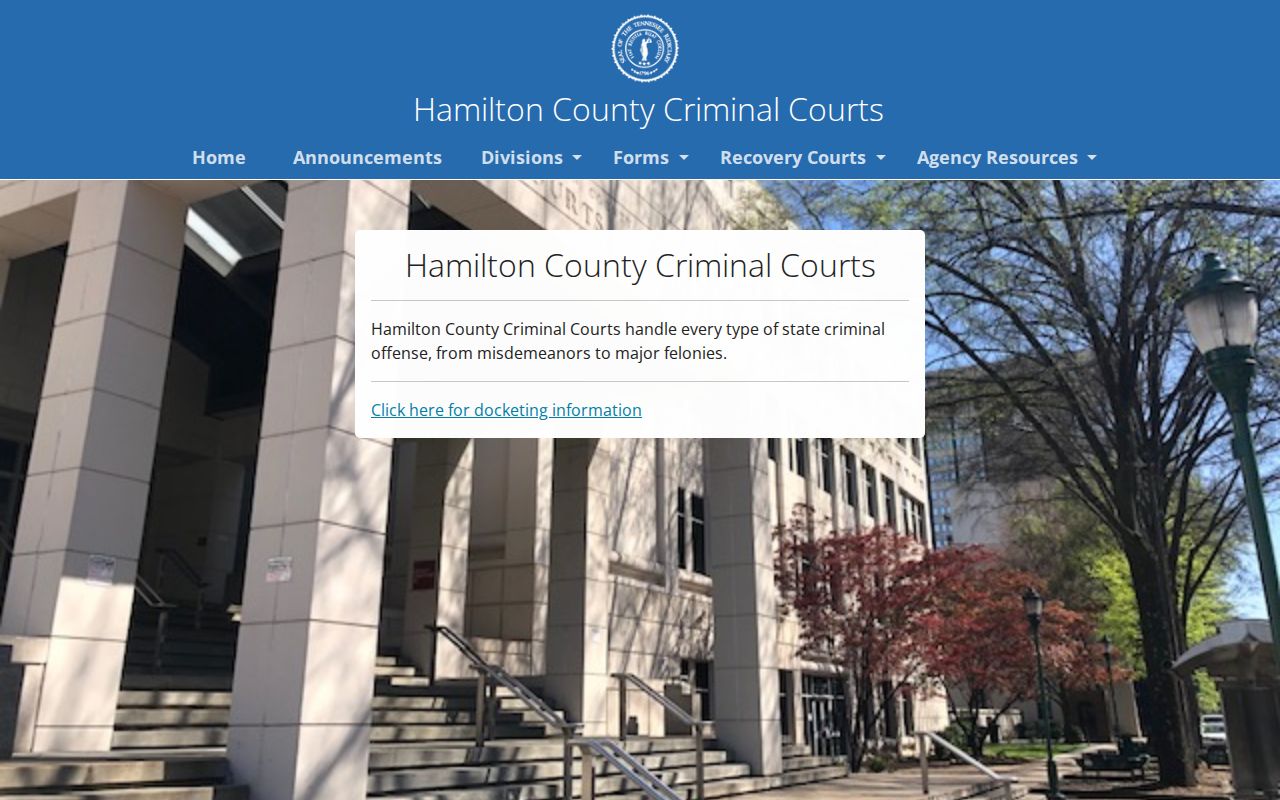
The page is a useful starting point for choosing a division, but the clerk remains the holder of the actual case file.
Hamilton County Court Cases Change Hands
A fresh Hamilton County criminal case often starts with Sessions Criminal, even when the alleged offense is a felony. The Sessions staff at the Courts Building and the jail-side clerk operation process arrest paperwork. A preliminary hearing tests whether probable cause supports further action. The grand jury may return a true bill, decline with a no bill, or leave a charge in another procedural posture. Only an indictment or qualifying appeal places the matter in the Criminal Court file.
This split prevents a common mistake. Room 108 and the jail office are tied to new arrest and Sessions work. Room 102 serves the Criminal division and keeps indicted or appealed Hamilton County court case records. A person who asks only one counter can miss the file because it has not yet moved, or because it belongs to a city court. More than 50,000 annual Sessions matters and paperwork events pass through the clerk, while Criminal Court receives about 6,000 new cases. Those figures count matters, not unique people.
Note: A General Sessions cross-reference can connect early paperwork to a later Criminal Court docket, but it is not itself a final disposition.
Hamilton County Case Record Searches
The local web route begins at the Hamilton criminal-information disclaimer. Hamilton County says the public data is updated daily, is not positive identity verification, and may require a paid clerk search or certified document for official proof. Published docket files are calendar-oriented. Searchers should use the docket and SPN references they expose, then request the underlying order from the clerk.
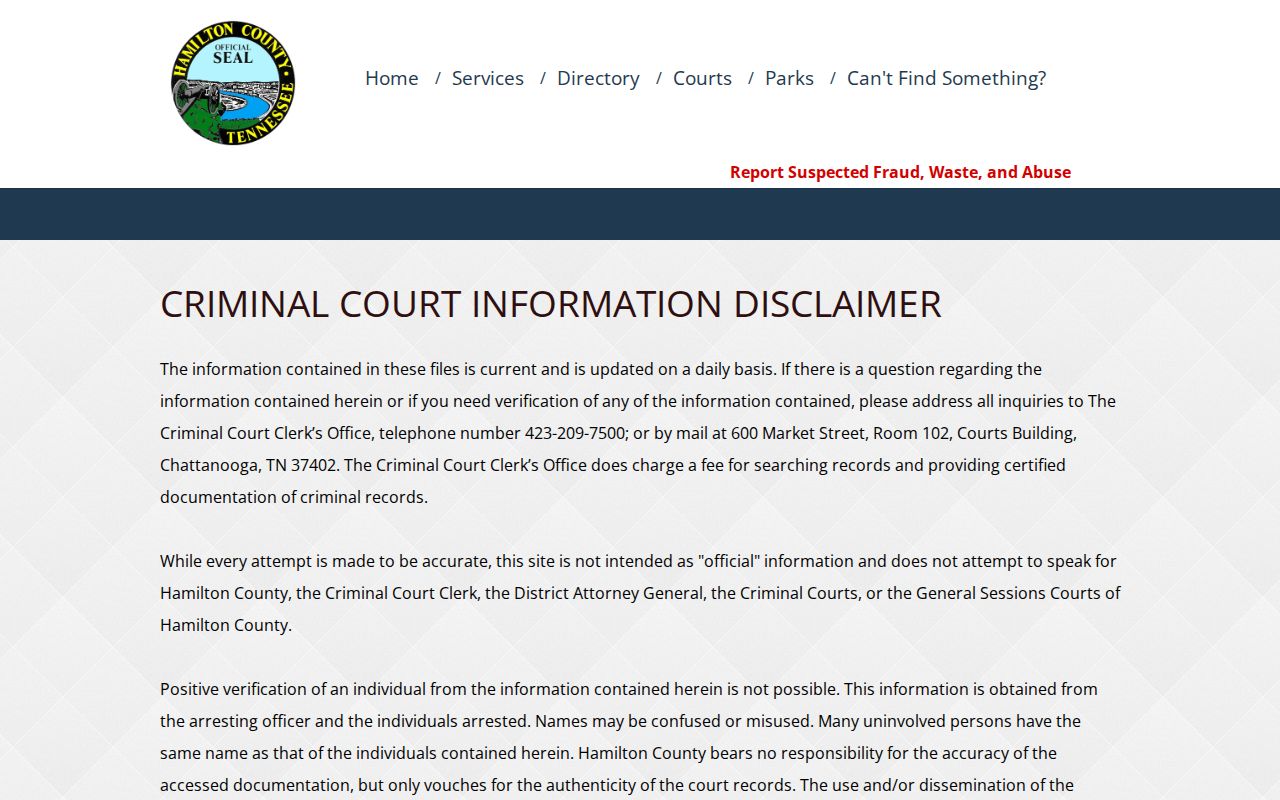
The disclaimer's warning matters when names are common, supplied identity data is wrong, or a docket has not yet caught up with a courtroom event.
- Open the Hamilton County criminal-information page, read the limits, and accept the disclaimer.
- Choose the relevant Criminal Court, Sessions, arraignment, trial, bond, grand-jury, or judgment docket.
- Match the docket number, SPN, GS cross-reference, court division, and filing date instead of relying on a name alone.
- Read the reverse-chronological events and distinguish a setting or continuance from a plea, dismissal, or judgment.
- Call or visit the Criminal Court Clerk for the filed order, plain copy, certified disposition, current fee, and delivery options.
| Published field | Format | Use | Limit |
|---|---|---|---|
| Docket number | Case identifier | Primary clerk reference | Must match the court and division |
| SPN | Local person number | Links jail and docket data | Does not prove identity by itself |
| GS cross-reference | Sessions identifier | Tracks the earlier case stage | May differ from the indicted docket |
| TCA and TIBRS codes | Offense codes | Clarify listed charge | Check the final judgment for amendments |
| Event narrative | Dated text | Shows hearings and court action | A scheduled event is not an outcome |
Verify Hamilton County Court Cases
Online Hamilton County court case records help locate a matter, but the clerk supplies verification. The Criminal Court Clerk's Criminal division is in Room 102 at 600 Market Street, Chattanooga, Tennessee 37402. The public counter is open Monday through Friday from 8:00 a.m. to 4:00 p.m. Call 423-209-7500 before ordering to ask about the current search or certification charge, payment, page estimate, and delivery route. The county states that searches and certified documentation carry a fee, but no clear current amount was found in the official disclaimer.
The clerk's official contact form offers a remote question channel.
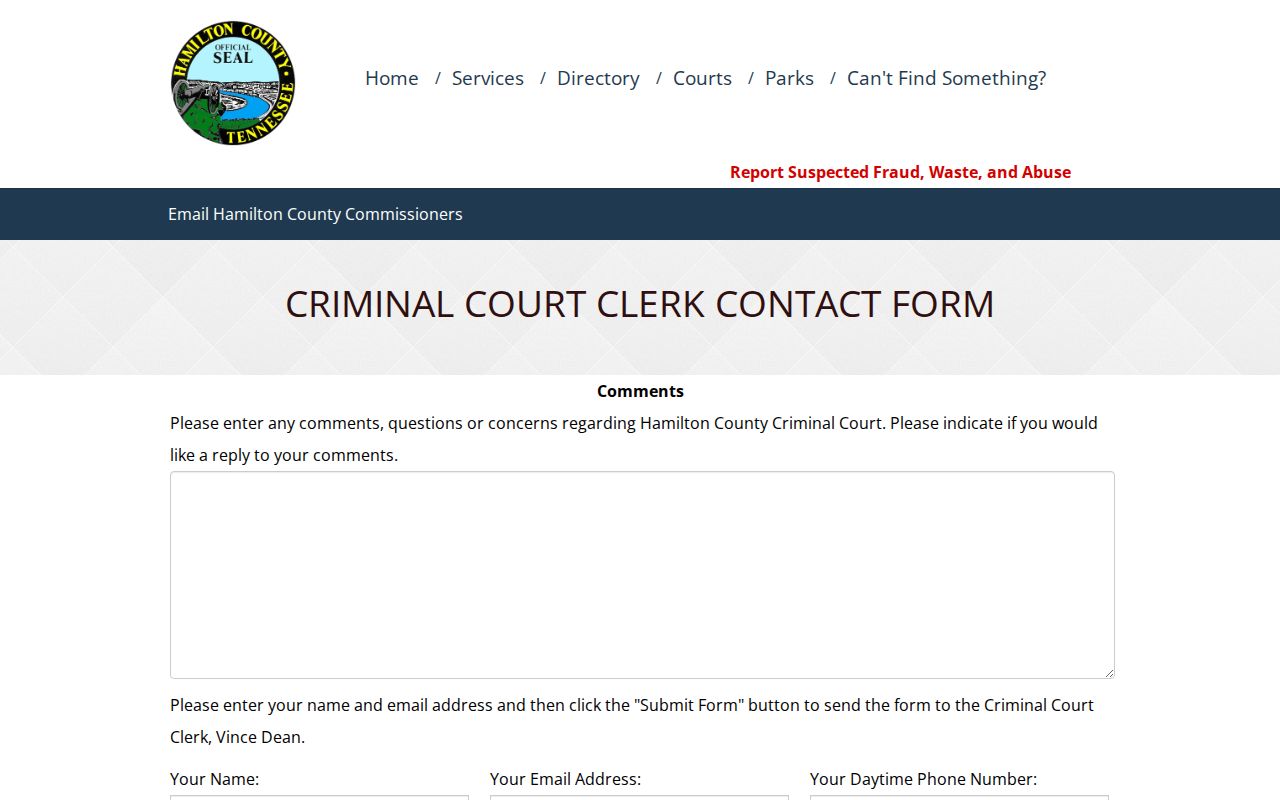
Include the case number, document name, court division, and whether a plain or certified copy is needed so staff can identify the right Hamilton County file.
Criminal Court Clerk
Room 102
600 Market Street
Chattanooga, TN 37402
423-209-7500
Monday-Friday, 8:00 a.m.-4:00 p.m.
What a Criminal Case File Contains
A Hamilton County criminal case file centers on prosecution and judicial action. It can show how the original allegation became a complaint or indictment, how counsel and bond were handled, and whether the case ended by plea, trial, dismissal, or another disposition. The online docket may summarize those events but may not contain every pleading or signed order. Ask the clerk for the document that answers the exact question.
| Case number and court | Identifies the Hamilton County division and file that controls the prosecution. |
|---|---|
| Charging document | Shows the complaint, indictment, count, alleged offense, and statutory code as filed. |
| Docket events | Records arraignment, appointed counsel, pleas, settings, motions, continuances, and other action. |
| Bond and appearances | May list bond amount, surety information, active-bond date, counsel, and court dates. |
| Disposition and judgment | Shows dismissal, nolle prosequi, acquittal, plea, verdict, or other charge outcome. |
| Sentence and conditions | Records confinement, probation, costs, treatment terms, and later revocation action when filed. |
The full case file is the best local source for charge changes. An arrest label, an indictment count, and the judgment can each use different terms.
Read Hamilton County Case Dockets
Hamilton County dockets include procedural phrases that can look conclusive when they are not. “Continued” means the event moved to another date. “Possible resolution” signals a setting where a negotiated outcome may be discussed, not proof that an agreement was reached. “Active bond” describes a release status or bond listing. None replaces the signed judgment.
- True bill
- The grand jury approved an indictment for filing in Criminal Court.
- No bill
- The grand jury declined to indict the presented charge.
- Arraignment
- The court presents the charge and addresses the plea and case status.
- Nolle prosequi
- The prosecution formally declines to proceed on that charge at that time.
- Disposition
- The recorded outcome of a charge or case, which must be read count by count.
Use the reverse-chronological event narrative as a route to the final order. If the wording remains unclear, request the judgment and sentencing documents from Hamilton County Criminal Court Clerk.
Criminal Case Stages in Hamilton County
The Hamilton County path depends on the charge and court, but a felony commonly begins with arrest paperwork and judicial review in General Sessions. The preliminary stage can lead to grand-jury action. A true bill opens an indicted Criminal Court file, followed by arraignment, pretrial motions or status settings, and then a plea or trial. A judgment and sentence close the trial stage, subject to later motions or appeal.
Case flow: Charges Filed › Arraignment › Pretrial › Plea or Trial › Disposition › Sentencing
A misdemeanor may end in General Sessions rather than pass through each felony step. City matters can stay in municipal court, while an appeal may move into Hamilton County's court structure. Court of Criminal Appeals review creates a separate appellate record.
Note: A docket date marks a scheduled or completed event; only the filed order establishes what the Hamilton County court decided.
Hamilton County Specialty Court Cases
Some Hamilton County court cases include treatment reviews and program milestones instead of a straight line from plea to sentence. The Hamilton County Mental Health Court began in 2015 and works at pre-arrest, bond, custody, and probation points through a local team that includes court officials, the Public Defender, mental-health providers, the District Attorney, and TDOC probation.
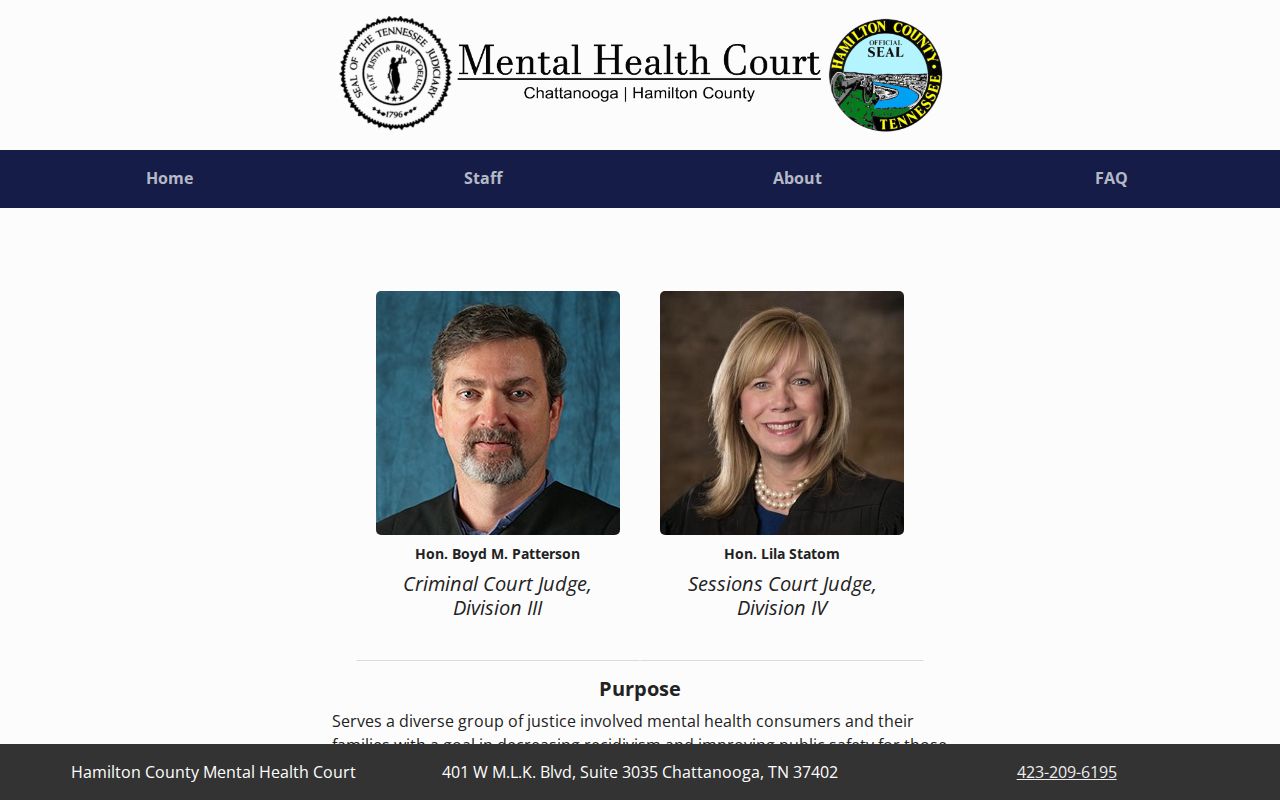
Participation may add status checks, treatment conditions, or program events, but the official Hamilton County docket controls the procedural record.
The Hamilton County Veterans Treatment Court has linked tracks in General Sessions Division 5 and Criminal Court Division 3.
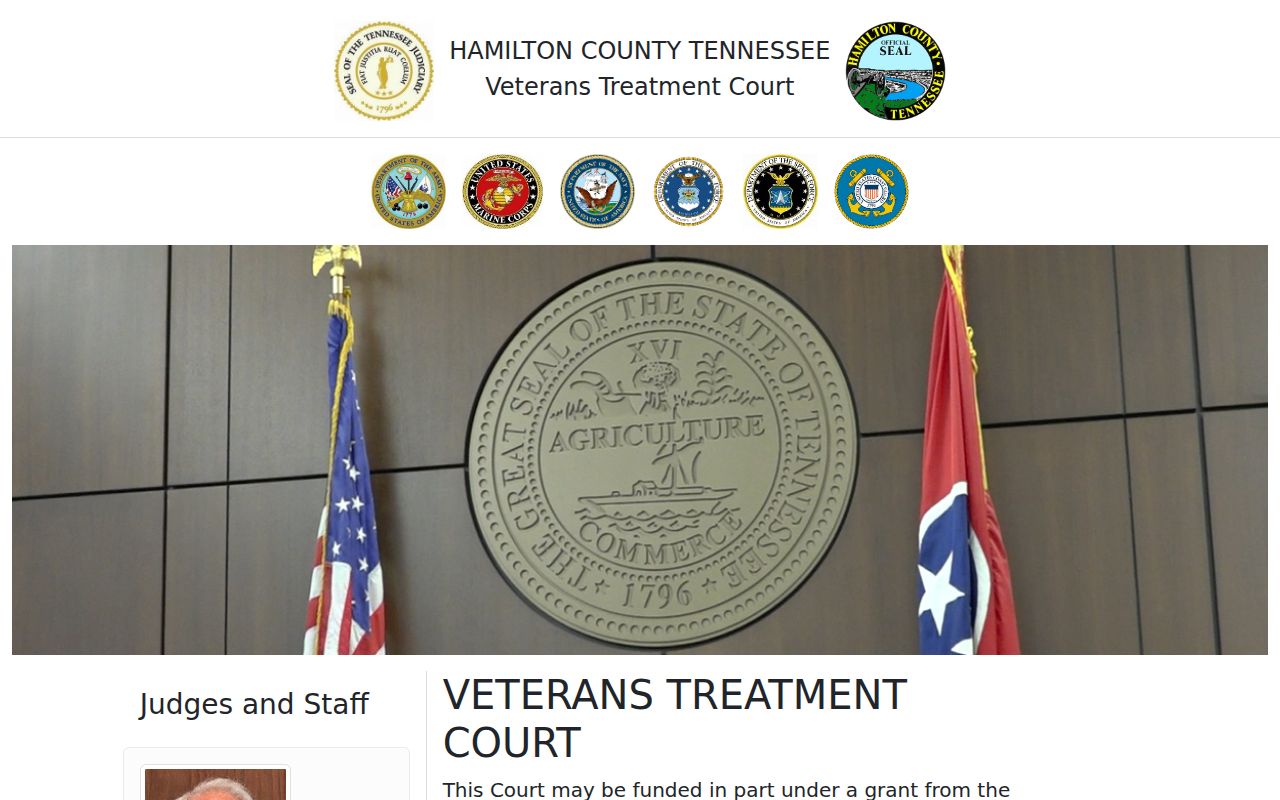
That two-track design is another reason to identify the court and division before asking for a Hamilton County case file. Recovery Court adds a further treatment-centered docket.
Hamilton County Criminal Case Appeals
Tennessee has no unified public database for Hamilton County trial cases. The Administrative Office of the Courts' Public Case History, also called C-Track, covers the Supreme Court, Court of Appeals, and Court of Criminal Appeals. It does not replace the Hamilton County clerk's trial file. Use it after a criminal appeal has reached the state appellate level.
The official appellate Public Case History supports searches by appeal sequence or case number, case style, party, and organization. It covers appeals with a record filed after September 1, 2006, makes filed documents available for later periods, and reports data through the prior business day.
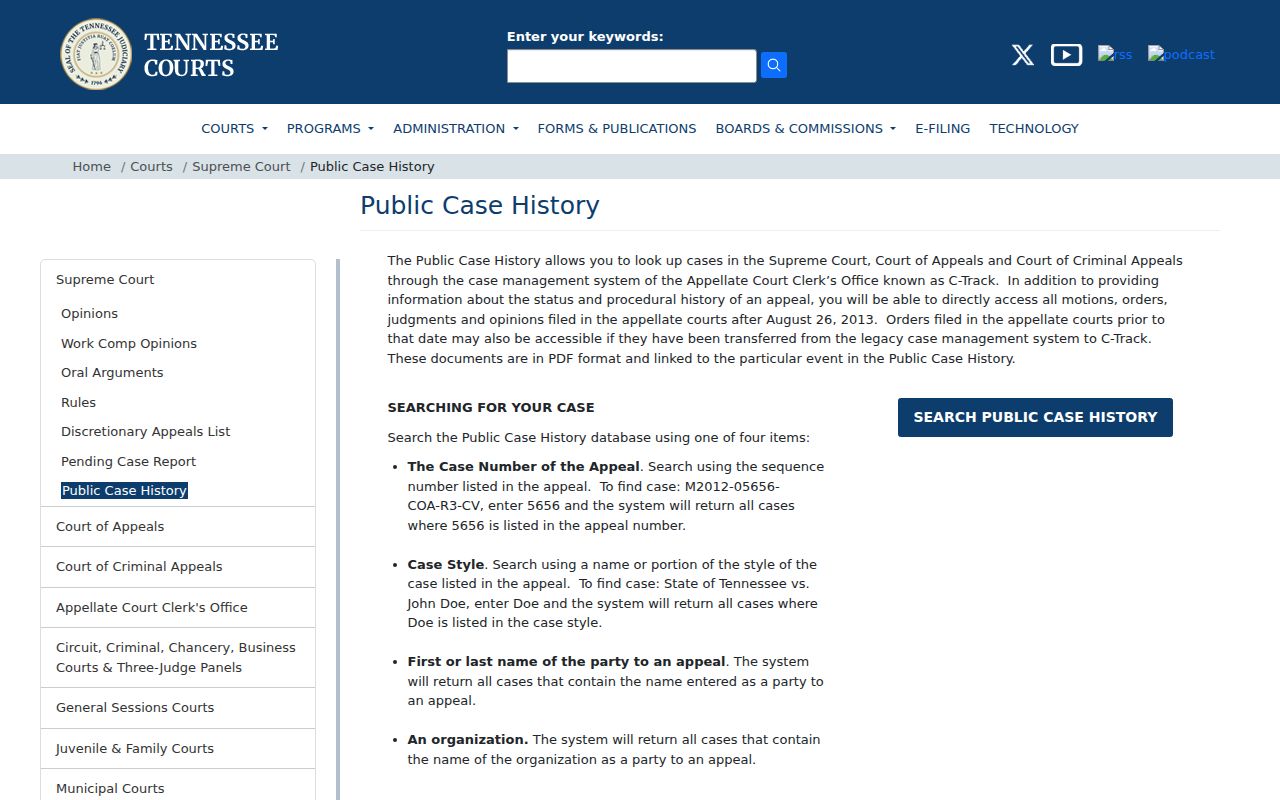
Compare the appellate number with the Hamilton County trial docket. The two files answer different questions and may use distinct identifiers.
| C-Track search field | Type | Required | Use |
|---|---|---|---|
| Appeal sequence or case number | Identifier | Not stated | Direct route when the appellate number is known |
| Case style | Text | Not stated | Search the published appellate caption |
| Party | Text | Not stated | Locate an appeal by a named party |
| Organization | Text | Not stated | Find a listed organizational party |
Access Rules for Case Records
Hamilton County court records are generally subject to Tennessee access law and court rules, but public access has limits. Tennessee Supreme Court Rule 34 governs court-record access and recognizes exclusions and redactions. Juvenile files, sealed or expunged matters, protected victim and minor details, Social Security numbers, and other confidential data may not appear in the public view. Grand-jury deliberations remain confidential even when a returned indictment becomes part of a filed case.
When a Hamilton County court case is absent, first confirm that the correct clerk holds it. A new felony may still be in Sessions, a city matter may remain in municipal court, and an appeal may be in C-Track. An expunged or sealed file may be lawfully withheld. For a public file that is not online, request a clerk search or inspect it at the proper counter. The Hamilton County arrest search can supply an SPN or booking reference, but it cannot establish the court outcome.