
Hamilton County Criminal History Checks
No single search returns every Hamilton County criminal record. Begin with the kind of event you need to confirm. A current custody question belongs with the Hamilton County Sheriff's Office inmate list. A charge, hearing, plea, or final judgment belongs with the Hamilton County Criminal Court Clerk. A Tennessee-wide name match belongs with the TBI repository. Appellate cases have a separate state search, while federal cases use the federal court system. This split matters because an arrest report, jail entry, court file, and rap sheet describe different stages.
The Hamilton County government directory is the official starting point for county offices. Its page view shows the department routes a reader must separate before requesting a record.

Use that directory to confirm an office, then follow the record through the steps below. Keep full names, date of birth, known spelling variants, SPN, docket number, report number, and arrest date at hand when they are known.
- Identify whether the source record is a police report, booking entry, court case, state history, correction record, or registry entry.
- Search the matching official portal with the narrowest reliable identifier, such as a docket number or SPN.
- Compare identity and case fields. A common name by itself is not a positive match.
- Trace charges to the Hamilton County court disposition rather than stopping at the arrest entry.
- Ask the record holder for a certified copy when the online view is not enough.
Hamilton County Court Record Geography
Two nearby downtown buildings can send a record search in the wrong direction. Hamilton County Criminal Court Clerk staff keep indicted and appealed criminal files in Room 102 at 600 Market Street. Sessions Criminal staff work in Room 108 and at the jail office. The public Hamilton County Criminal Court counter is open weekdays from 8:00 a.m. to 4:00 p.m., while the Sessions arrest-paperwork function operates around the clock. The county says Sessions Criminal handles more than 50,000 cases per year and Criminal Court receives about 6,000 new cases.
The county's court system page shows how these courts divide their work.
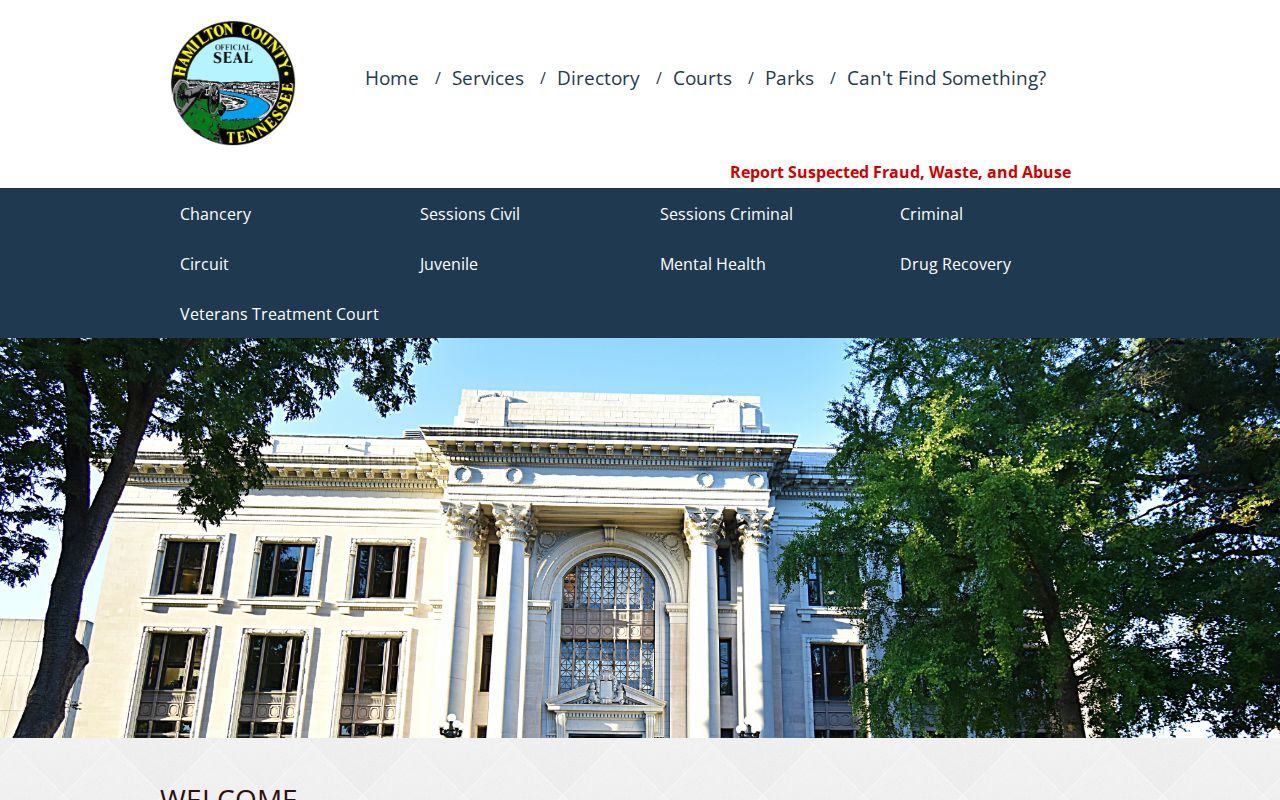
General Sessions resolves misdemeanors and state traffic matters and conducts felony preliminary hearings. A supported felony can move to the grand jury and one of three Criminal Court divisions. The courthouse at 625 Georgia Avenue houses the Circuit Court Clerk, but the civil portal there is not the Hamilton County criminal docket. Call 423-209-7500 before travel when an archived file, certified copy, access accommodation, or holiday schedule may affect the visit.
Official Background Checks in Tennessee
The Tennessee Bureau of Investigation is the central repository for fingerprint-supported criminal history. Its public TORIS product is a $29, Tennessee-only, name-based check. A TORIS result can be a possible match because the public search does not use the subject's fingerprints and may not capture aliases. It does not replace the full Hamilton County case file, out-of-state court sources, or federal records.
For a personal review of FBI identity history, the subject can use the FBI Identity History Summary process. Tennessee Applicant Processing Services, or TAPS, uses IdentoGO sites for checks authorized by a law or program. TAPS registration needs the program's OCA or service code, so it is not a general public nationwide name search. The FBI base personal-review fee found in the research is $18. TAPS charges vary by authorized program.
| Official route | Base fee found | What it covers |
|---|---|---|
| TBI TORIS | $29 | Tennessee repository name match |
| FBI identity summary | $18 | Subject's fingerprint-based FBI history |
| TAPS / IdentoGO | Program-specific | Authorized state and FBI fingerprint processing |
| Hamilton clerk copy | Confirm current fee | County case documents and dispositions |
Hamilton County TORIS Record Limits
The TORIS order interface asks for supplied identity details and returns the repository view that TBI can associate with that name.
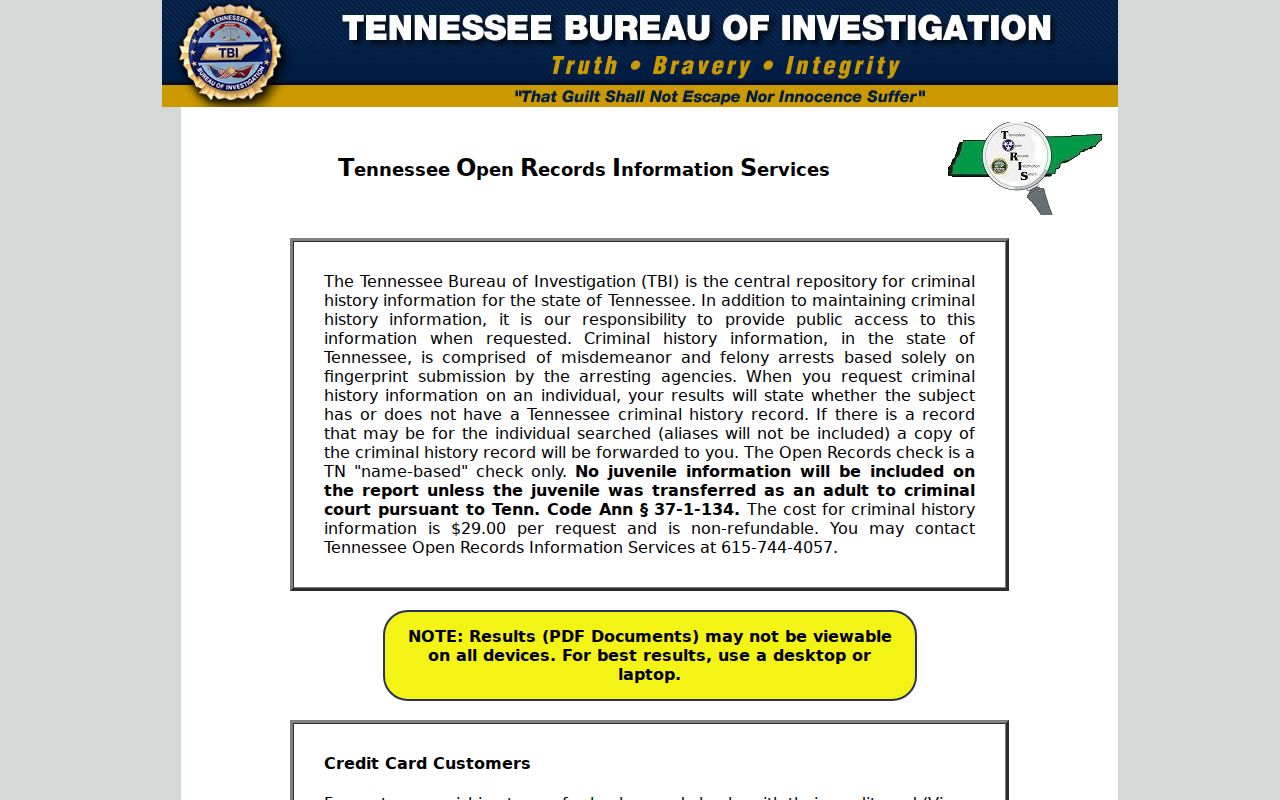
A careful order uses the full and accurate name, date of birth, sex, race, and other details requested by the current form. A no-record response does not prove that no local police report, unreported disposition, federal matter, or out-of-state case exists. It can also miss a Hamilton County event if fingerprints or a matching disposition did not reach TBI.
The TBI background-check page separates the public name route from fingerprint services.
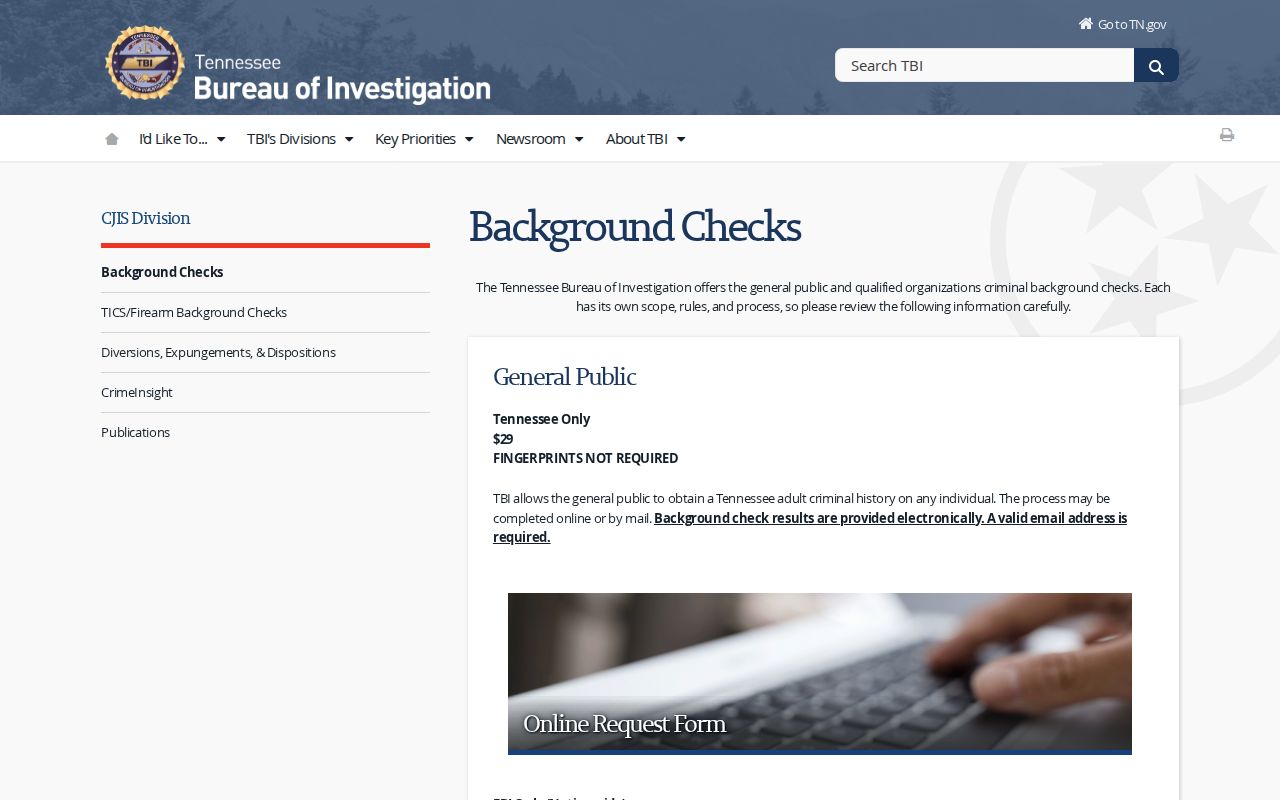
Use TORIS for the statewide repository question and the Hamilton County clerk for the exact charge path. The Hamilton County clerk can confirm whether an arrest count was amended, dismissed, replaced by indictment, or resolved under another count.
Note: A name-only possible match should be reconciled with identity details and the final Hamilton County court disposition.
Kinds of Criminal Records
Hamilton County agencies create separate documents as a case moves. The arresting agency writes the incident or arrest report. The jail creates a booking and custody entry, assigns an SPN, records charges delivered at intake, and captures fingerprints. General Sessions receives the first court paperwork. An indictment creates the Criminal Court case, and TBI links fingerprint arrest cycles to dispositions sent by courts and agencies.
- Incident and arrest reports: agency narratives about the alleged event and custody decision, not findings of guilt.
- Booking records: intake identity, SPN, received charges, bond, holds, and current custody information.
- Court case files: complaints, indictments, docket events, orders, pleas, dispositions, costs, and sentences.
- Warrant records: court commands that police or deputies may execute, subject to sealed and juvenile limits.
- Repository and correction records: TBI arrest cycles and TDOC felony custody or supervision data.
A current jail entry can vanish from the live roster after release even though an agency retains the report. A court dismissal does not, by itself, erase every booking or repository entry. For that reason, the source and date of each Hamilton County criminal record should stay attached to any notes made during a search.
Hamilton County Jail and Warrant Records
The Hamilton County Sheriff's Office operates distinct current-inmate, booking-report, and warrant tools. The Hamilton County current-inmate page accepts either last name or SPN and includes a full-list option. It answers whether a person appears in current county custody, not whether that person has ever been arrested. Booking reports organize recent intake by date. For a full look at those channels, use the site's Hamilton County arrest search.
The HCSO service page links records, corrections, and enforcement functions.

The Hamilton County sheriff's open-warrant search adds first name, last name, warrant number, partial address, and full-list controls. It updates from the court system daily at 4:00 p.m., excludes warrants issued before January 1, 2008, and warns that recent changes may not yet appear.
The official Hamilton County warrant search displays the public query controls.
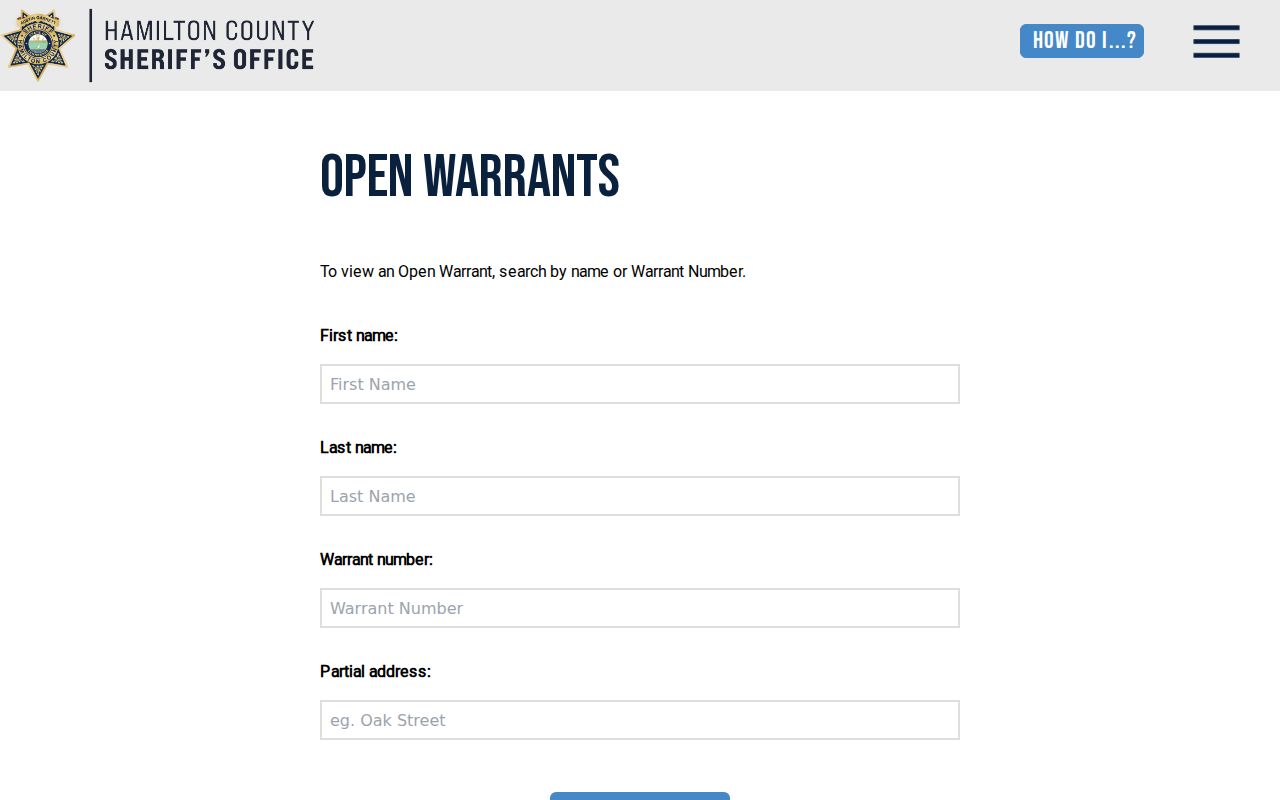
Verify a possible warrant with HCSO at 423-209-7000 or the issuing clerk before acting on an online result. A current roster is not a warrant-clearance tool, and a stale docket must not be treated as proof that a warrant remains active or has been cleared.
Hamilton County Criminal Records: What They Contain
The fields depend on the record's stage. A booking entry centers on intake and custody. A clerk file centers on the charge instrument and court action. A TBI history centers on identity and arrest cycles tied to reported outcomes. Hamilton County docket samples can include court division, trial date, judge, caption, charge text, Tennessee statute number, TIBRS code, General Sessions cross-reference, docket number, SPN, bond, counsel, filing date, and a reverse-chronological event history.
| Name and identifiers | Recorded name, aliases when shown, birth details, SPN, or repository identity fields. |
|---|---|
| Arrest and booking | Agency, intake date, received charge, fingerprint cycle, custody state, and bond data. |
| Charge and statute | Complaint or indictment count, offense text, code citation, and later amendments. |
| Disposition | Dismissal, nolle prosequi, acquittal, plea, conviction, diversion, or other final action. |
| Sentence | Custody, probation, fines, costs, conditions, and concurrent or consecutive terms. |
| Supervision | County custody or TDOC prison, probation, parole, inactive, and release information. |
The Criminal Court Clerk page identifies the clerk divisions and local record duties.
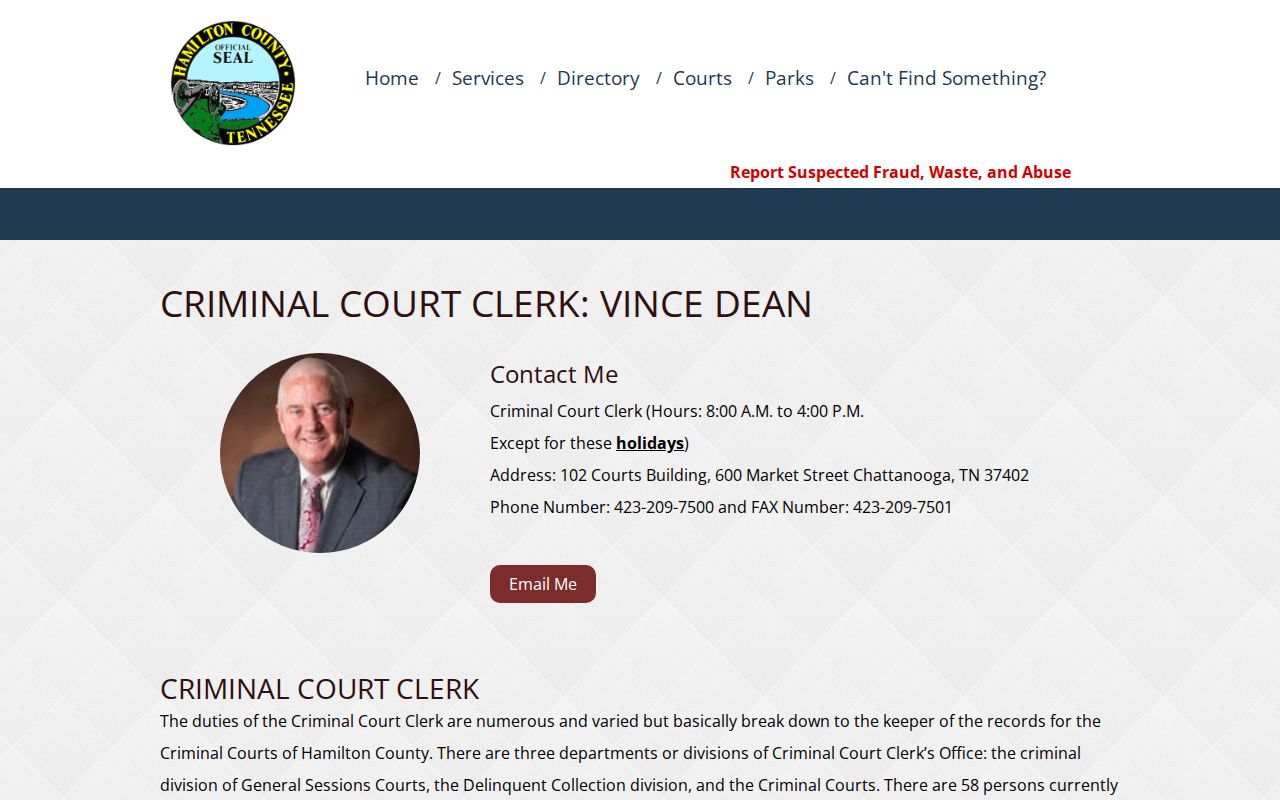
Docket terms such as continued, possible resolution, and active bond describe procedure. They are not final outcomes. Request the underlying order when the event list alone does not establish how a count ended.
Hamilton County Specialty Court Records
Hamilton County has named court programs that can alter the sequence of docket events without creating a separate public background-check system. Mental Health Court began in 2015 as a Public Defender-led collaboration and works at pre-arrest, bond, custody, and probation points. Veterans Treatment Court operates linked tracks in General Sessions Division 5 and Criminal Court Division 3. Recovery Court is another local specialty route.
Participation may add program reviews, treatment conditions, supervision entries, or a later disposition to the normal case history. The Criminal Court Clerk still holds the authoritative filed record. A reader should not infer the outcome from a program name alone. Check the court judgment and any later expungement order.
- Arraignment
- The hearing where charges and the plea or case status are addressed.
- Diversion
- A qualifying path that may defer judgment and support dismissal or expungement after completion.
- Nolle prosequi
- A formal decision by the prosecution not to proceed with that charge at that time.
- Disposition
- The recorded outcome of a charge or case.
Note: A program entry explains part of the case path, but the signed judgment establishes the legal result.
Tennessee Public Access Laws
The Tennessee Public Records Act generally opens government records to qualifying inspection unless another law makes the material confidential. Hamilton County custodians may require enough detail to locate the file and may ask for identity and Tennessee-citizenship information. Access does not remove protections for juveniles, active investigations, victims, financial data, sealed matters, or nonpublic registry fields.
Key authorities:
Tenn. Code Ann. § 10-7-503 sets the public inspection rule and response framework.
Tenn. Code Ann. § 10-7-504 lists confidential records and exceptions.
Tenn. Code Ann. § 40-32-101 governs qualifying criminal record expungement.
Tennessee Supreme Court Rule 34 governs access to court records and recognizes exclusions and redactions.
Ask the holder for the narrow record needed. The clerk can verify a disposition, HCSO can address its own report, and a city police department must handle the report its officers created. Public registry access carries a separate rule against harassment or retaliation.
Hamilton County Sheriff Record Requests
HCSO is the fallback for reports created by deputies and for releasable jail material. It is not the place to order a TORIS background check or a report made by Chattanooga, East Ridge, or Red Bank police. Send a focused TPRA request to openrecords@hcsheriff.gov or call the Records Office at 423-209-7111. HCSO states a seven-working-day response period. That response can produce the record, deny access, or give a time and cost estimate.
Incident reports may need four business days or more before release, and records tied to an active investigation may be withheld until that investigation ends. Body-camera, dash-camera, and other video outside an active matter follows the General Counsel open-records route. Include a report number when known, date, time, location, involved party, and precise record description.
| HCSO item | Published charge or term |
|---|---|
| Paper duplication | $0.15 per page |
| Disk | $1.00 each |
| Labor | Actual hourly rate after first free hour |
| Payment on form | Cash, money order, or certified check |
Inspection may avoid some copy cost. HCSO's form asks the requester to attest Tennessee citizenship and describe the exact records. Contact the office before sending payment because policy and available formats can change.
Restricted, Sealed & Expunged Records
Juvenile cases do not run through the ordinary adult docket. Use the Juvenile Court Clerk or court-authorized route and expect confidentiality. Active-investigation reports can be delayed. Social Security numbers, financial identifiers, protected victim and minor details, sealed filings, and nonpublic registry data may be redacted or withheld. A missing public result can therefore reflect a legal limit rather than a search failure.
Hamilton County expungement starts in the court that disposed of the charge. Obtain a certified disposition, test eligibility under Tenn. Code Ann. § 40-32-101, use the current Tennessee or county form, and file with the Hamilton County Criminal Court Clerk or proper municipal court. Dismissal, acquittal, no-bill, and some diversion outcomes have broader relief than convictions. Only listed misdemeanor and Class E felony convictions qualify, subject to the statute's conditions.
An older TBI FAQ identifies a $100 clerk fee for qualifying conviction expungement through the district attorney in the county of arrest. Verify the current amount and any waiver with the Hamilton clerk at 423-209-7500. After entry, confirm that the order reached TBI and other holders. TBI says it deletes qualifying charges and related fingerprints when no other charge remains; one portal's disappearance does not prove that every custodian finished processing.
Hamilton County Correction Record Flow
Hamilton County jail custody and state felony custody are separate layers. HCSO owns the local booking and current-jail record. After a felony sentence or when state supervision begins, TDOC maintains the correction record in TOMIS and makes eligible information available through Felony Offender Information Lookup, or FOIL. FOIL can cover people currently or formerly incarcerated, on probation, on parole, or in an inactive supervision status.
The TDOC FOIL page identifies the search scope and routes to VINE and MyTN.
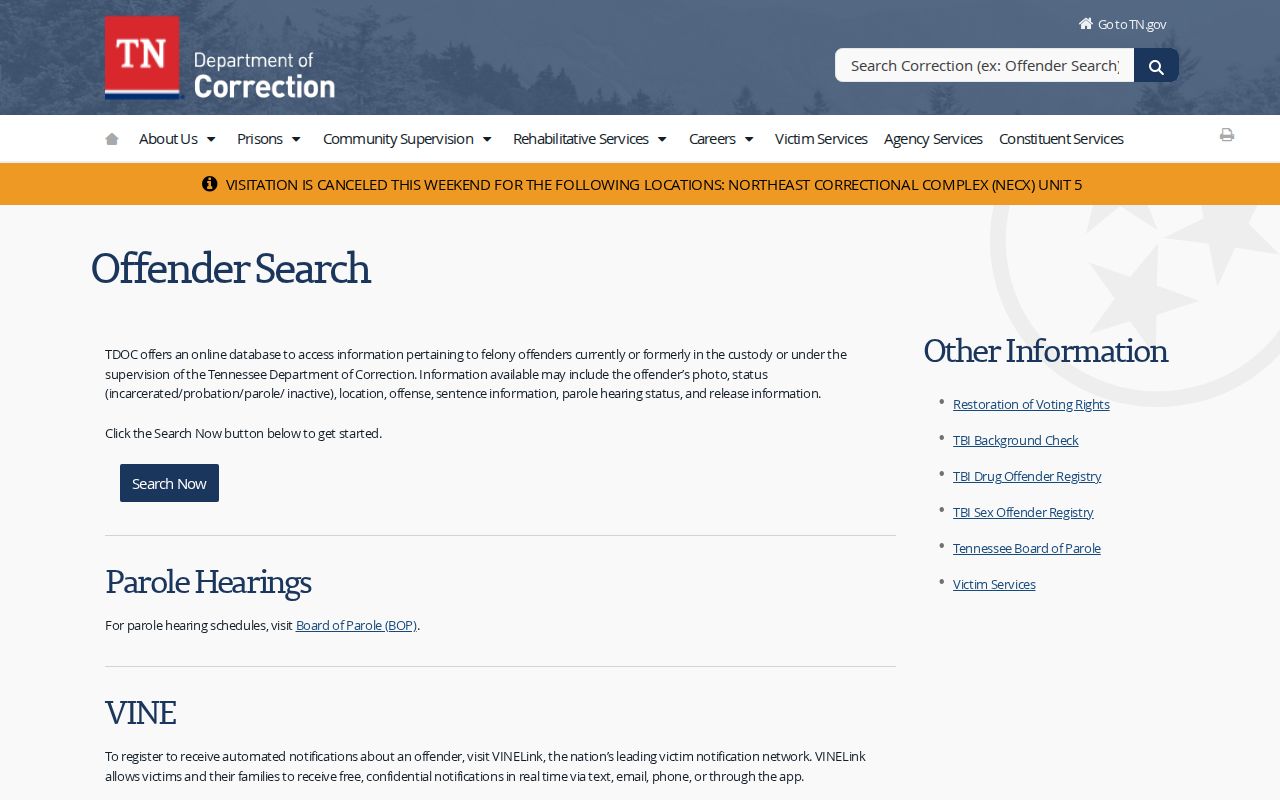
A FOIL profile may show status, location, offense, sentence, parole-hearing information, and release data. It does not cover the full local misdemeanor docket or every person awaiting trial in the Hamilton County jail. VINE gives custody notifications, but it is not a certified criminal history. The court judgment remains the source for the sentence that caused correction supervision.
Record flow: arresting agency › Hamilton County jail › Hamilton County courts › TBI repository › TDOC when a state sentence or supervision applies.
Hamilton County Federal Criminal Records
Federal criminal cases do not appear as Hamilton County prosecutions even when the courthouse is nearby. The county is in the Chattanooga Division of the U.S. District Court for the Eastern District of Tennessee. PACER supplies federal docket sheets and filed documents after registration. The Federal Bureau of Prisons locator covers federal custody, which differs from the HCSO jail list and TDOC FOIL.
The Eastern District court site is the official local federal entry point.
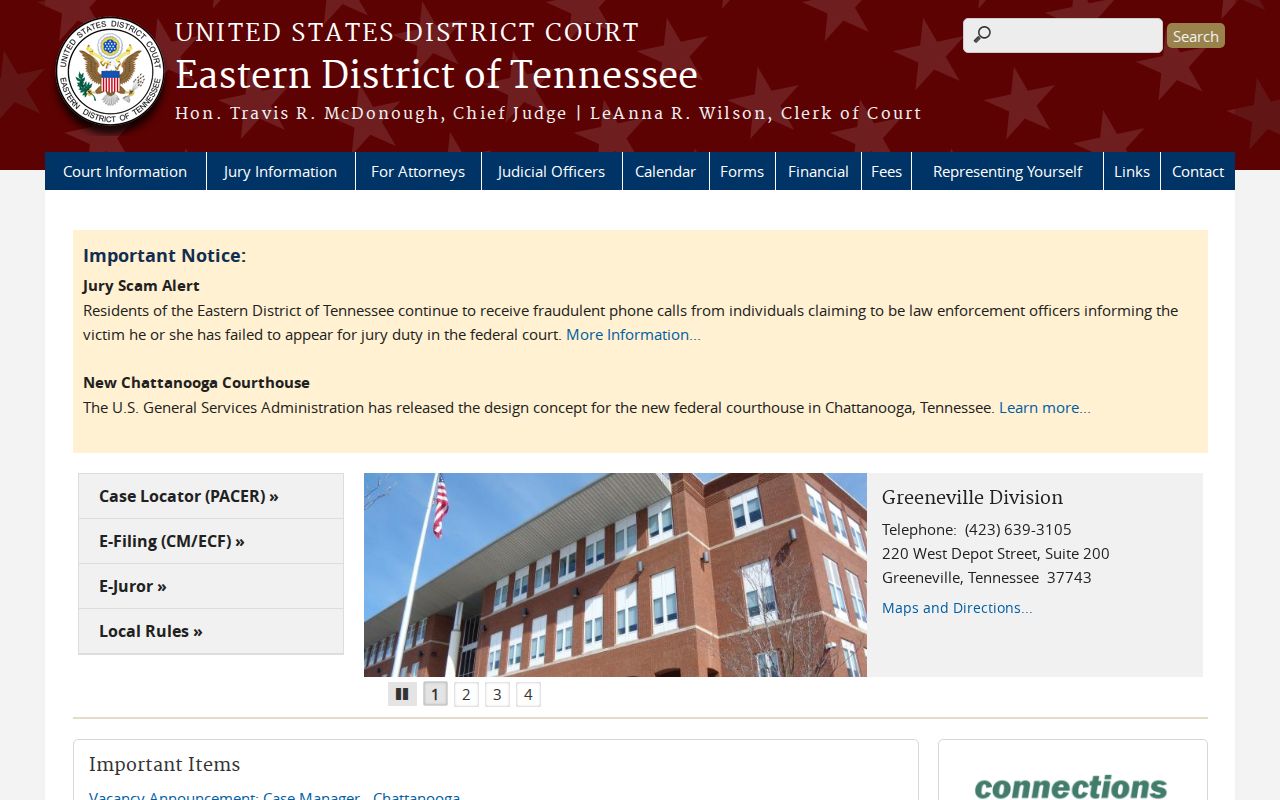
The current federal courthouse is at 900 Georgia Avenue. A courthouse project announced in 2026 is planned for Vine Street, so readers should verify the current location before a visit.
The Eastern District U.S. Attorney page explains the Chattanooga branch's nine-county prosecution area.
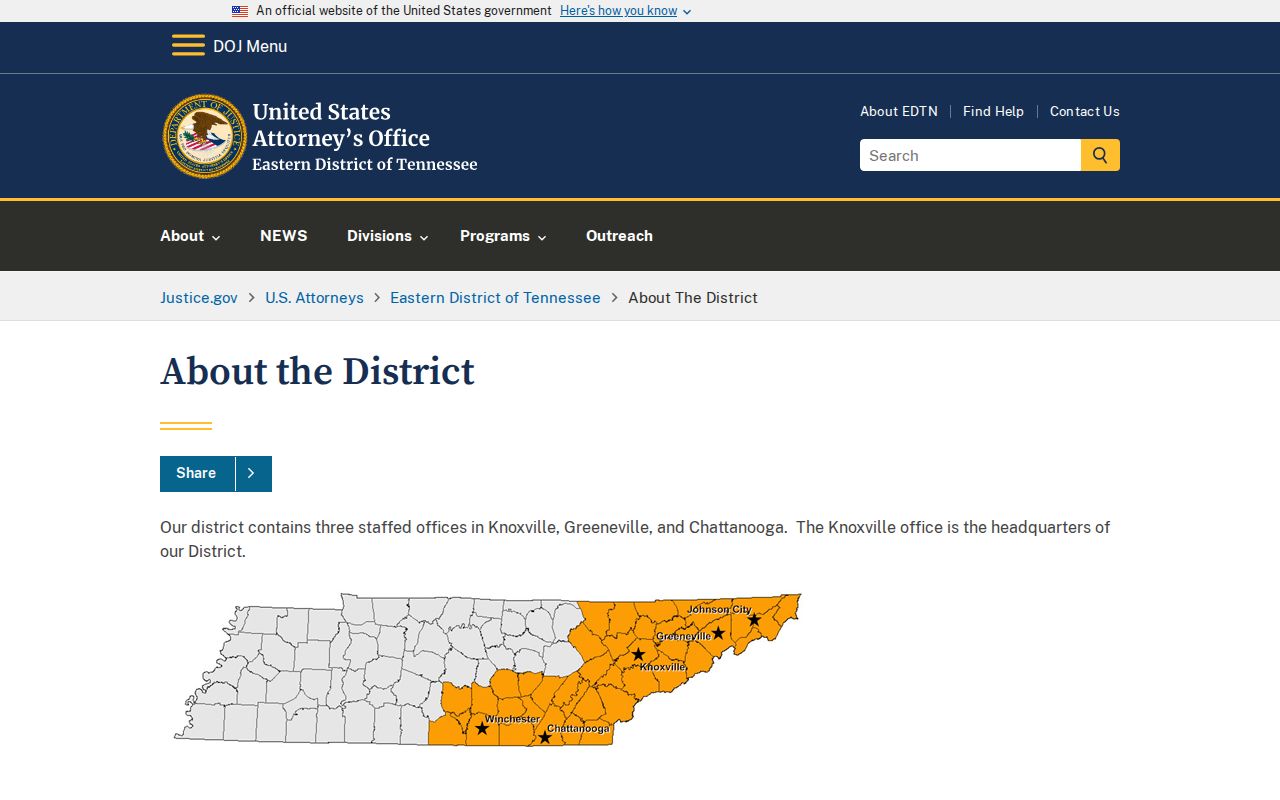
The office at 1110 Market Street handles federal prosecution, but it is not a public background-check repository. Use the federal clerk and PACER for case documents, the Bureau of Prisons for federal custody, and the FBI personal identity-history process for a subject's own federal identity summary.
City-by-City Criminal Records in Hamilton County
City police reports and municipal court files stay local even when a custodial booking moves to the Hamilton County jail. Chattanooga, East Ridge, and Red Bank are the county's three largest incorporated cities in the common July 1, 2024 Census estimate used by the research. Their local channels differ. Chattanooga splits report intake from copy requests, East Ridge uses a city records policy and scheduled municipal court, and Red Bank publishes a dated court docket rather than a name-search database.
Chattanooga Record Check
Population estimate 191,496. Police reports, GovQA access, city court, and county booking routes.
East Ridge Record Check
Population estimate 21,970. Police Records, city public records, Tuesday court, and county jail routing.
Red Bank Record Check
Population estimate 12,073. Police report forms, municipal docket files, and clerk fallback.
Use the city page for the local report and municipal case. Move to the Hamilton County clerk when a felony is bound over, a city matter is appealed, or a county court disposition is needed.